
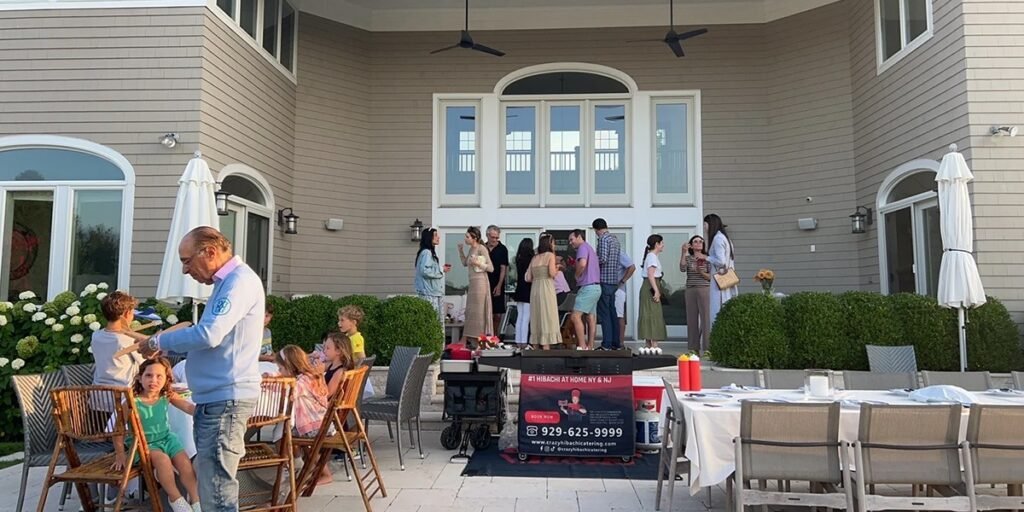
Searches for hibachi catering in New York often reflect a shift in how events are being designed across the city. Hosts are no longer satisfied with passive dining formats. The expectation is interaction, timing, and atmosphere working together.
At Crazy Hibachi Catering, this demand translates into a structured experience where food, performance, and guest engagement operate in sync. A hibachi party is not simply a catering choice. It is a deliberate format designed to hold attention in environments where distractions are constant.
Define What a Hibachi Party in New York Actually Delivers
A hibachi party in New York combines culinary execution with live performance. The core format is built around teppanyaki cooking, where chefs prepare meals on a flat grill directly in front of guests.
At Crazy Hibachi Catering, the structure is intentional. It rests on three interconnected elements that elevate the experience beyond standard catering.
- Live Culinary Performance
Cooking unfolds in real time. Each movement, from slicing to plating, is deliberate and visible. Guests observe process, not just outcome. - Fresh, Sequential Dining
Meals are prepared in waves rather than in bulk. This ensures temperature, texture, and timing remain controlled. - Audience Interaction
Engagement is built into the format. The chef becomes a focal point, guiding the pace of the event without overtaking it.
Experiences like this reveal a broader industry trend. Catering is evolving from delivery to choreography, where timing and interaction define perceived quality.
Understand Why New York Events Demand High Engagement Formats
New York presents a unique challenge for event design. Attention spans are fragmented, spaces are often constrained, and expectations are elevated.
Several forces shape this environment:
- Dense Social Calendars
Guests attend multiple events regularly. Distinction becomes essential for memorability. - Space Constraints
Apartments, rooftops, and compact venues require formats that maximize impact within limited footprints. - Experience-Driven Culture
Static buffets struggle to maintain interest. Interactive formats align more closely with modern expectations.
At Crazy Hibachi Catering, these constraints are not limitations. They are design inputs. The setup is adapted to fit the environment while maintaining performance quality.
This reflects a larger market observation. Urban density does not reduce opportunity. It increases the need for precision.
Break Down the Guest Experience in a Hibachi Setting
A hibachi event is structured to guide guest attention from arrival to conclusion. The sequence is consistent, but the tone adapts to the audience.
The experience begins with subtle orientation. Guests gather around the grill, forming a natural focal point. This eliminates the need for forced coordination.
Cooking then progresses in phases. Proteins, vegetables, and rice are introduced gradually, creating anticipation. The rhythm is deliberate, ensuring guests remain engaged without feeling rushed.
Interaction is layered into the process. It is measured and situational. The goal is to create connection without disrupting flow.
At Crazy Hibachi Catering, this sequencing is refined through repetition and training. The outcome feels spontaneous, but the structure is controlled.
A critical insight emerges here. Guests remember continuity more than individual highlights. Smooth progression defines the overall impression.
Evaluate Operational Precision Behind Consistent Execution
Behind the visible performance lies a system of preparation that ensures consistency across events. Execution depends on discipline rather than improvisation.
Key operational components include:
- Chef Selection and Readiness
Chefs are evaluated for technical skill, composure, and audience awareness. Performance is as important as cooking ability. - Ingredient Standardization
Proteins and produce are pre-portioned and quality-checked. This reduces variability during live cooking. - Equipment Reliability
Grills and tools are maintained to deliver consistent heat and control. Equipment failure is not left to chance. - Spatial Planning
Layouts are assessed before setup. Movement paths for chefs and guests are considered to avoid disruption.
At Crazy Hibachi Catering, these systems operate quietly. Guests experience fluidity, not the structure behind it.
This reflects a broader truth in service industries. The highest-quality experiences often conceal the most rigorous preparation.
Compare Hibachi Catering Against Traditional Event Models
Evaluating hibachi catering in New York requires a comparison with conventional formats. The differences are not only operational but experiential.
| Factor | Traditional Catering | Hibachi Catering Experience |
| Food Preparation | Pre-cooked or batch-based | Cooked live per guest |
| Guest Interaction | Minimal | Continuous and dynamic |
| Space Utilization | Static layout | Centralized focal point |
| Timing Control | Fixed service windows | Flexible, adaptive pacing |
| Memory Impact | Moderate | High and lasting |
At Crazy Hibachi Catering, the distinction is clear. The value is not limited to food quality. It lies in how the experience is delivered and perceived.
This comparison highlights an industry tension. Efficiency-driven models prioritize scale, while experience-driven models prioritize engagement.
Recognize the Role of Cultural Relevance in Event Design
Hibachi’s appeal in New York extends beyond format. It intersects with a broader cultural appreciation for Japanese cuisine and performance-based dining.
The familiarity of teppanyaki techniques, combined with their visual appeal, creates immediate accessibility. Guests understand what they are seeing, even if they are experiencing it in a new setting.
At Crazy Hibachi Catering, this cultural alignment enhances the experience. It allows events to feel both novel and recognizable.
A deeper observation emerges here. Cultural relevance accelerates adoption. When a format resonates with existing awareness, it requires less explanation and delivers faster impact.
Conclusion: Designing Events That Hold Attention in a Crowded Market
Choosing hibachi catering in New York is rarely about convenience alone. It reflects a broader intention to create an event that sustains attention in a highly competitive social environment.
A hibachi party succeeds when culinary precision, performance, and spatial awareness align seamlessly. The result is an experience that feels cohesive rather than assembled.
At Crazy Hibachi Catering, this alignment defines the approach. The takeaway is straightforward. In a city where options are abundant, the events that endure are those designed with intention, not just execution.
FAQs
How many guests can a hibachi party in New York accommodate?
Guest capacity depends on space and the number of chefs assigned. Smaller gatherings can feel more intimate, while larger groups may require multiple grill stations. A well-planned hibachi party in New York ensures each guest remains engaged without overcrowding the cooking area.
Is hibachi catering suitable for indoor New York spaces?
Yes, hibachi setups can be adapted for indoor environments, provided there is adequate ventilation and space. Many New York events use patios, rooftops, or open-plan interiors. When considering hibachi catering in New York, space assessment is a key part of planning.
How far in advance should hibachi catering be booked in New York?
Booking at least one to two weeks in advance is recommended, especially during weekends and peak seasons. Early planning ensures availability and allows time to coordinate logistics. Demand for hibachi catering in New York tends to increase during holidays and social event seasons.
What type of menu is typically offered at a hibachi party?
Menus usually include a selection of proteins such as chicken, steak, shrimp, or vegetarian options, along with rice and vegetables. Customization is often available. A hibachi party in New York focuses on fresh, made-to-order meals tailored to guest preferences.
Does hibachi catering include setup and cleanup?
Most hibachi catering services handle grill setup, cooking, and cleanup, allowing hosts to focus on their guests. Requirements from the host are minimal, typically limited to space and seating. This streamlined approach is a key advantage of hibachi catering in New York.Top of Form